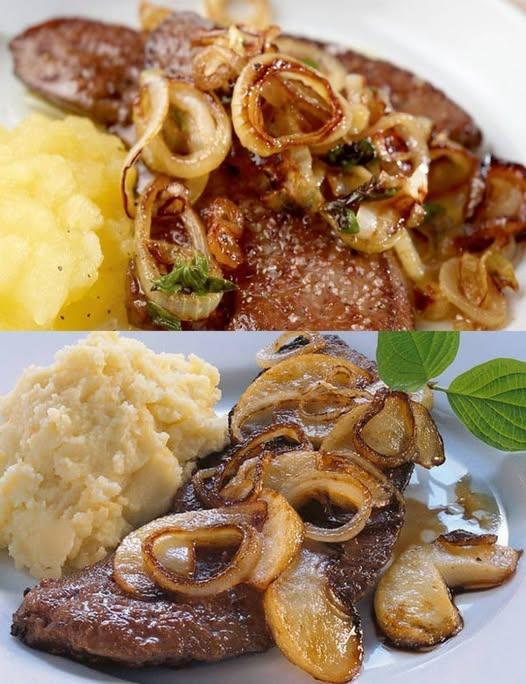
Cooking Instructions
Prep the Chicken Livers:
Rinse the chicken livers under cold water and pat them dry with paper towels. Trim off any connective tissue or fat.
Lightly dust the livers with flour, shaking off any excess. This will help create a nice crust when cooked.
Slice the Onions:
Peel and slice the onions into thin rings. The thinner the slices, the quicker they will caramelize.
Cook the Onions:
In a large skillet, heat 2 tablespoons of oil over medium heat. Add the sliced onions and sauté them for about 10–15 minutes, stirring occasionally, until they are golden brown and caramelized. If they start to stick, add a splash of water.
Once the onions are caramelized, remove them from the skillet and set them aside.
Cook the Chicken Livers:
In the same skillet, add the remaining 2 tablespoons of oil. Increase the heat to medium-high.
Add the chicken livers and cook for about 3–4 minutes on each side, until they are browned on the outside but still slightly pink on the inside. Overcooking can make the livers tough, so aim for a tender texture.
Add the sage leaves and stir in the balsamic vinegar and white wine. Let the mixture simmer for a few minutes, allowing the flavors to meld.
Combine and Serve:
Return the caramelized onions to the skillet, mixing them with the chicken livers. Cook for an additional 1–2 minutes to heat through.
Taste and adjust seasoning as needed with salt and pepper.
Plate Your Dish:
Serve the chicken liver and onions hot, perhaps alongside mashed potatoes, rice, or a simple salad.
Why You Should Consider Eating Liver and Onions
Nutritional Benefits
Liver is often referred to as a “superfood” for good reason. Its high nutrient density makes it an excellent addition to a balanced diet. Here are some of the top health benefits:
Rich in Vitamins: The high vitamin A content supports vision, skin health, and immune function. Vitamin B12 is crucial for energy production and red blood cell formation.
Iron Source: Chicken liver is a great source of heme iron, which is more easily absorbed by the body than non-heme iron found in plant sources. This makes it particularly beneficial for individuals at risk of iron deficiency.
👉 Continue reading on the next page…
