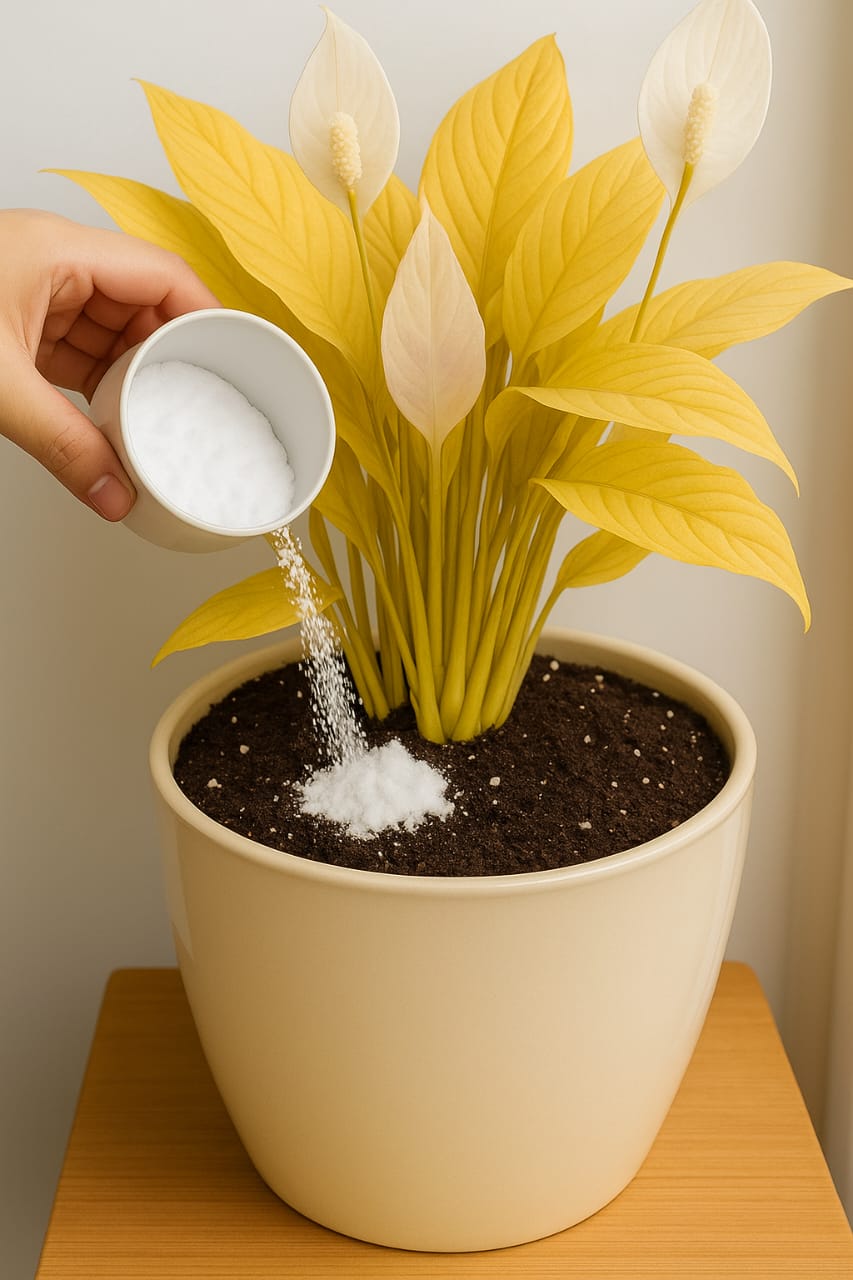
2. Underwatering
On the flip side, underwatering can also pose a significant risk to your peace lily. These plants require consistent moisture to thrive, and neglecting their watering needs can have adverse effects:
- Dehydration: Prolonged periods without water can lead to dehydration, causing leaves to droop and turn brown.
- Stunted Growth: A lack of water can hinder the plant’s ability to grow and bloom.
Signs of Underwatering:
- Drooping or wilting leaves.
- Brown, crispy edges on leaves.
- Soil pulling away from the edges of the pot.
Finding the Right Balance
The key to keeping your peace lily healthy lies in finding the right balance in your watering routine. Here are some essential tips:
- Soil Type: Use a well-draining potting mix designed for houseplants. A mix that retains moisture but allows excess water to escape is ideal.
- Watering Schedule: Water your peace lily when the top inch of soil feels dry to the touch. Typically, this might be once a week, but it can vary based on factors like humidity and temperature.
- Check the Pot: If your peace lily is in a pot without drainage holes, consider repotting it. Proper drainage is crucial for preventing root rot.
- Use Room Temperature Water: Cold water can shock the plant. Allow water to reach room temperature before watering your peace lily.
- Observe and Adjust: Pay attention to your plant’s response to watering. If you notice signs of overwatering or underwatering, adjust your schedule accordingly.
